
How to cope with losing a cat, it's a question we never want to ask. But here we are, and if you're reading this, we're sorry. Truly.
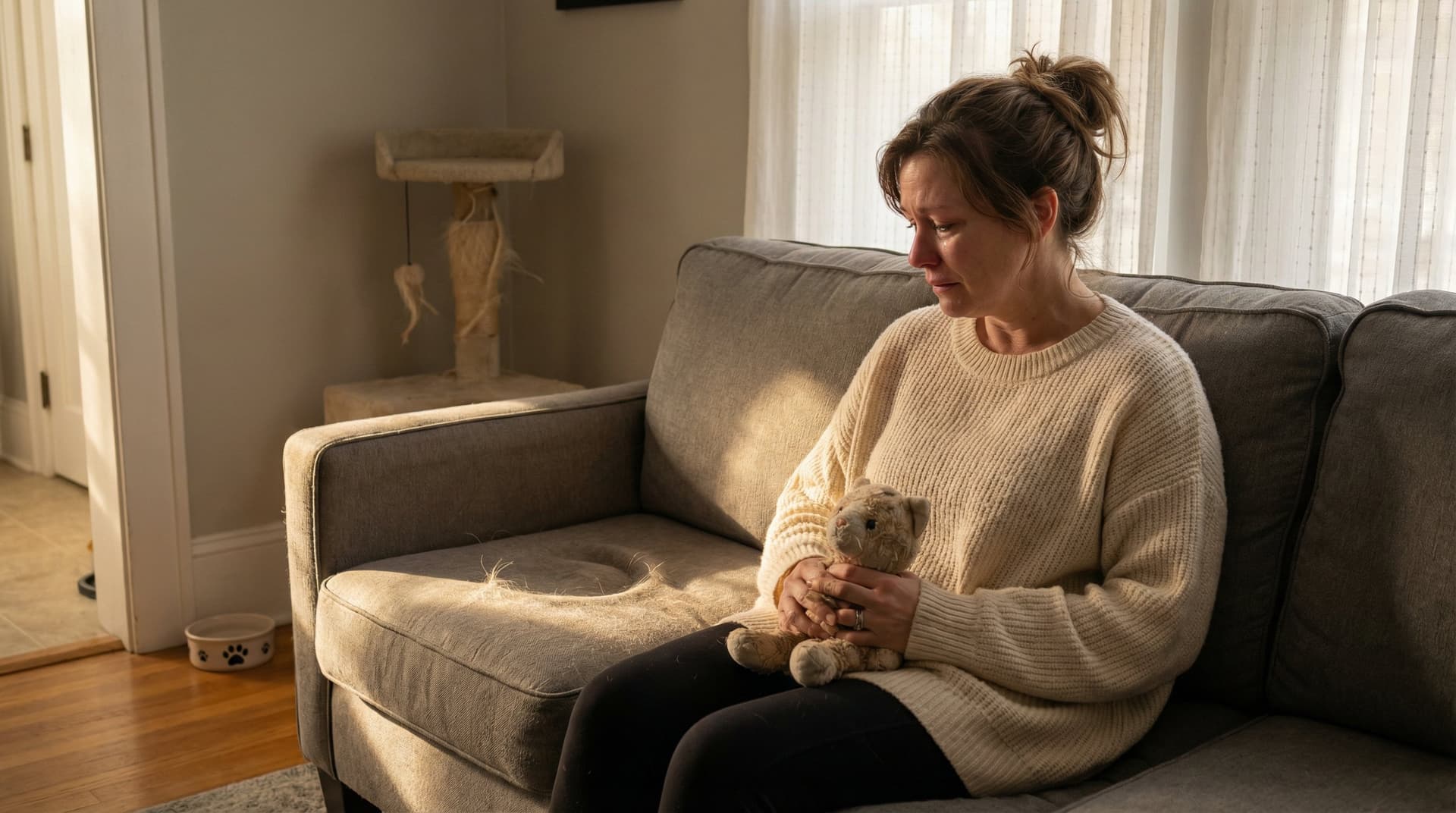
We know the quiet that fills a home when a cat is gone. The empty windowsill. The food bowl you can't bring yourself to pick up. That phantom sound of paws on hardwood at 3 a.m. Losing a cat isn't "just losing a pet." It's losing a family member who greeted you at the door, slept on your chest, and somehow always knew when you needed company.
This guide is for cat parents who are hurting. We'll talk about why this grief cuts so deep, share honest ways to process the pain, and gently explore what moving forward looks like, without ever forgetting the cat who changed your life.
Why Losing a Cat Hurts So Deeply

Let's be honest: some people won't understand your grief. They'll say things like "it was just a cat" or "you can get another one." Those words sting because they dismiss something real. Your cat was not replaceable. Neither is your pain.
Cats form intense, quiet bonds with their people. Research consistently shows that the human-animal attachment can rival the closeness we feel with other humans. Your cat knew your schedule, your moods, your favorite spot on the couch. That level of daily intimacy creates a bond that's profound, and losing it leaves a gap that's physically felt.
The Grief Is Real, and It's Complicated
When we lose a cat, we don't just lose a companion. We lose a routine. Morning feeding rituals. The weight of a warm body curled against our legs at night. The predictable rhythm of another living being sharing our space.
This is why grief after losing a cat can:
- Hit in waves you don't expect, You might be fine at the grocery store, then break down when you pass the pet food aisle.
- Interfere with daily functioning, Trouble sleeping, loss of appetite, difficulty concentrating at work.
- Trigger "grief ambushes", Sudden, intense bursts of sadness weeks or even months later, often sparked by a sound, a scent, or a memory.
We experienced this firsthand. One of our team members lost her 17-year-old tabby last year. She said the hardest part wasn't the day he passed, it was two weeks later, when she instinctively called his name walking through the front door. "I felt ridiculous," she told us. "But I also couldn't stop crying."
You're not ridiculous. You're grieving. And grief doesn't follow a schedule.
If you have other pets at home, watch them too. Cats and dogs who've lost a companion may show changes in behavior, eating less, vocalizing more, searching the house. They're coping with losing a cat in their own way, just like you are.
Healthy Ways to Grieve and Honor Your Cat's Memory

There's no "right" way to grieve, but there are ways that help, and ways that don't. Bottling everything up? That doesn't help. Pretending you're fine? That tends to make things worse.
Here's what we've found actually works when coping with losing a cat.
Let Yourself Feel It
Give yourself permission to cry. Sounds simple, but many cat parents feel pressure to "move on" quickly. Don't.
- Talk to someone who gets it. A friend who's lost a pet, a family member who loved your cat, or an online community of cat lovers. You need people who won't minimize your loss.
- Write about your cat. Journal entries, a letter to your cat, even a poem, it doesn't have to be good. It just has to be honest.
- Say their name out loud. This one is small but powerful. Keeping their name in conversation honors who they were.
We'll be vulnerable here: we once tried to "tough it out" after a loss. Didn't talk about it. Threw away the cat bed immediately. Within a month, the unprocessed grief showed up as irritability, insomnia, and a general numbness toward everything. Lesson learned, you can't skip grief, only delay it.
Create Something Meaningful
Memorials give grief a place to live outside your head. Some ideas that cat parents swear by:
- Plant a tree or flowering shrub in your cat's favorite sunny spot.
- Create a photo book or collage of your best moments together.
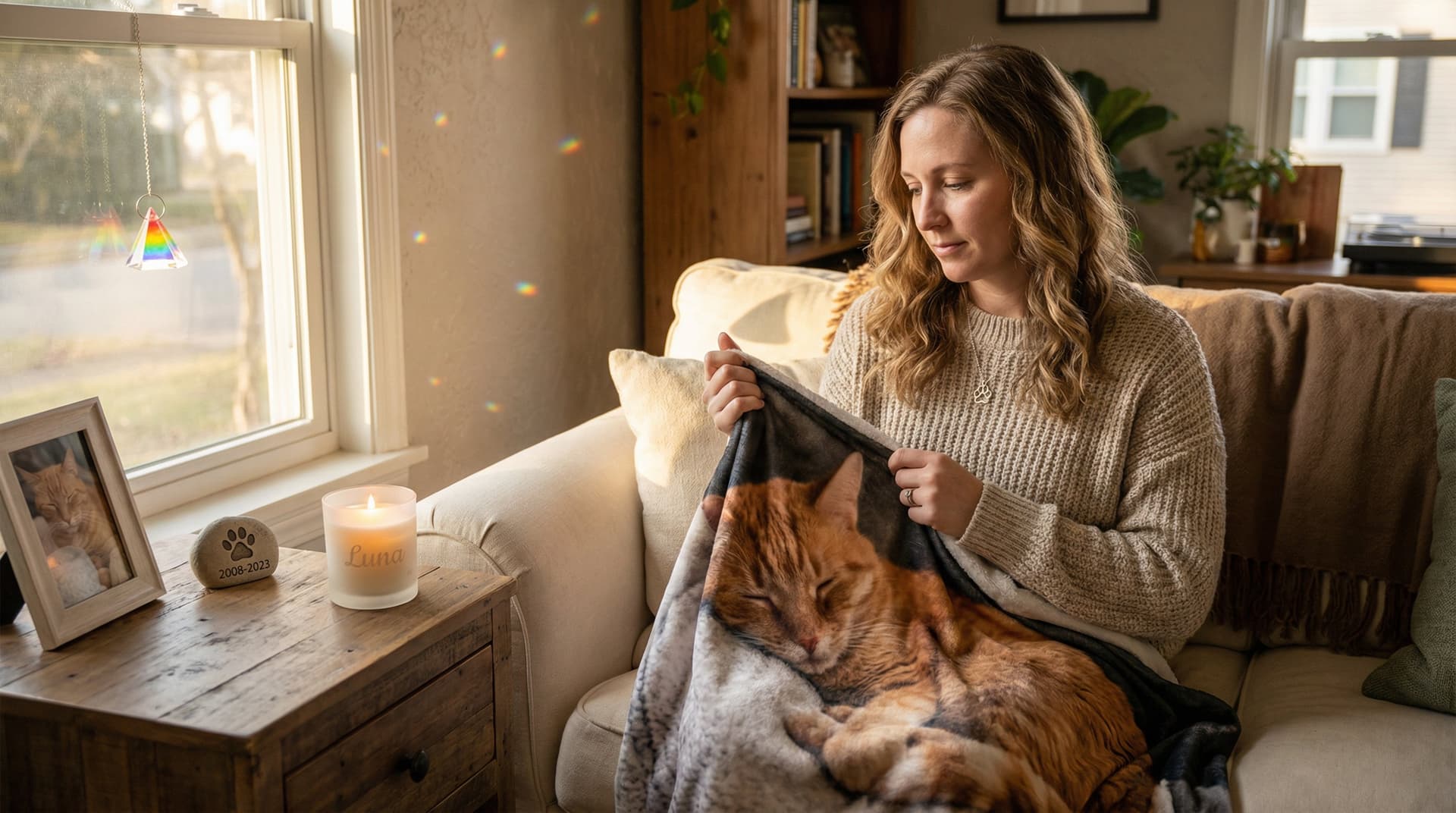
- Save a small keepsake, a collar, a whisker, a tuft of fur.
- Hold a small ceremony. It can be as simple as lighting a candle and sharing a favorite memory.
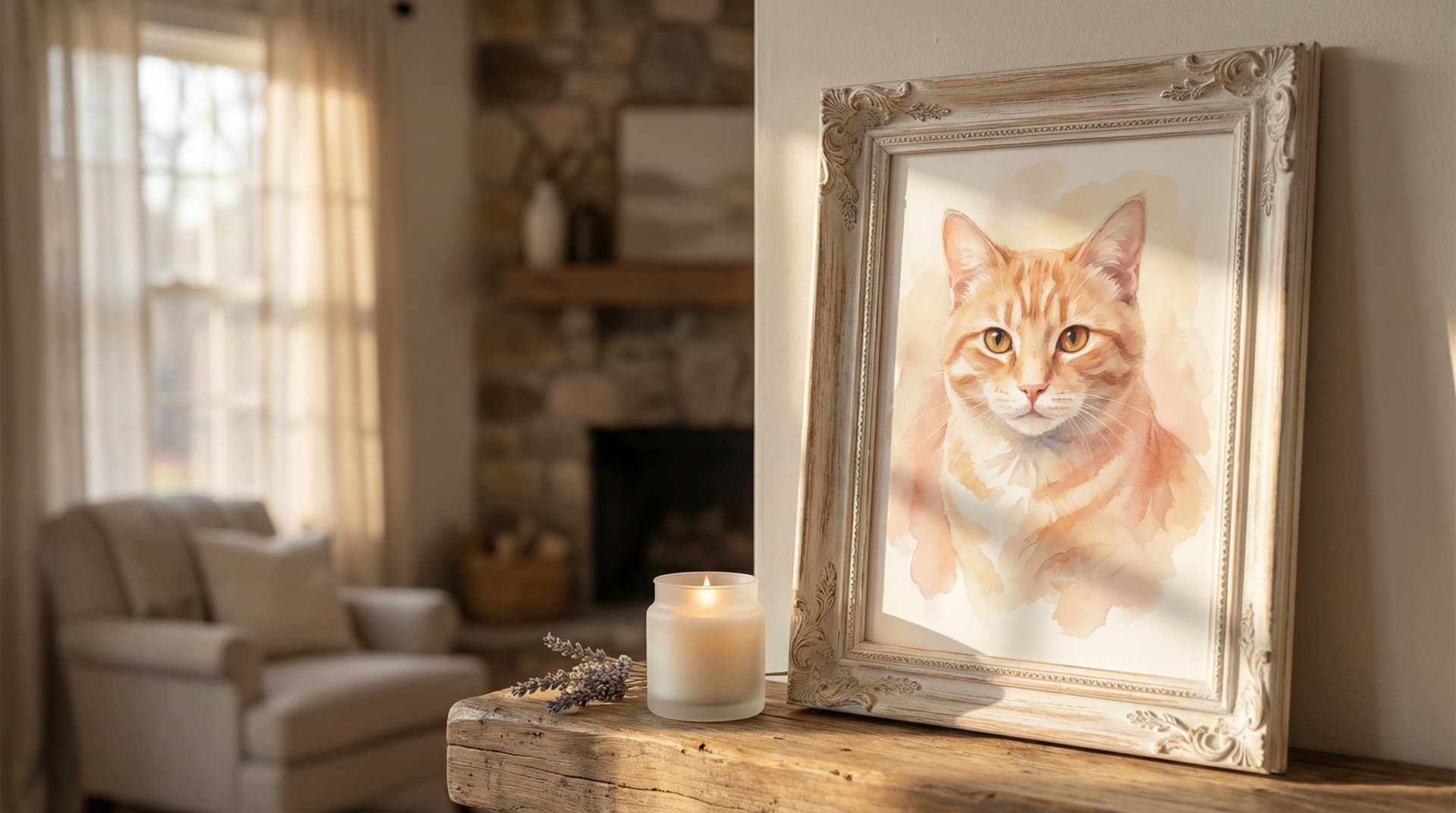
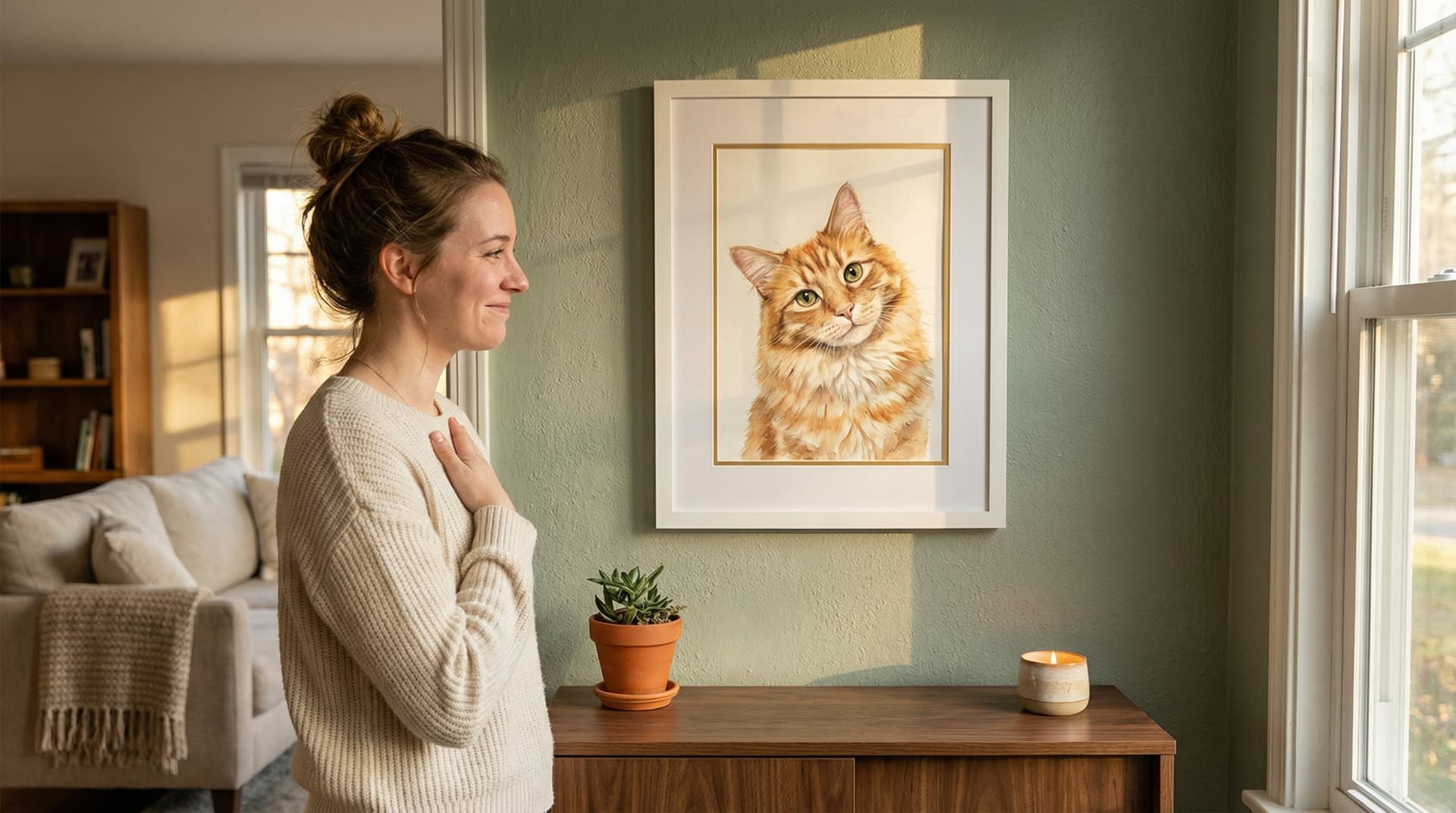
- Commission a custom cat portrait. Many cat parents find that turning a beloved photo into art gives them something beautiful to hold onto. At CatArt.ai, we create custom cat art from your photos, museum-quality prints in over 70 styles. It's a way to celebrate your cat's personality and keep their presence on your wall, not just in your memory.
Take Care of Yourself (Yes, Really)
Grief is exhausting. Your body needs support even when your heart is breaking.
- Maintain basic routines: Eat meals, drink water, get outside.
- Move your body. Even a 10-minute walk helps regulate the stress hormones grief produces.
- Keep routines for surviving pets. Their stability helps yours too.
- Consider a pet loss support group. The ASPCA offers a pet loss hotline, and local shelters sometimes host support meetings.
If grief overwhelms your daily life for weeks, you can't work, eat, or sleep, please talk to a therapist. There's zero shame in needing professional support. Coping with losing a cat is a legitimate form of bereavement, and you deserve real help.
Moving Forward Without Forgetting
Here's something we wish someone had told us earlier: moving forward is not the same as moving on. You don't "get over" a cat you loved. You learn to carry that love differently.
Grief takes its own time. For some, the sharpest pain fades in weeks. For others, months. Both timelines are normal. There's no deadline, and anyone who suggests one doesn't understand what your cat meant to you.
When You're Ready, Not Before
At some point, you may feel a pull to connect with cats again. That's not betrayal. It's your heart doing what it knows how to do.
Some ways to honor your cat's memory while opening your heart again:
- Volunteer at a local shelter or rescue. Your experience as a devoted cat parent is valuable, and helping cats in need can be deeply healing.
- Visit a cat cafe. No commitment, just purring and warmth when you need it.
- Consider adopting when the time feels right. A new cat won't replace yours, but they'll write a new chapter in your story as a cat lover.
One honest warning: don't rush into adoption to fill the void. We've seen cat parents bring home a new kitten days after a loss, then struggle because they're grieving one cat while bonding with another. Give yourself space. You'll know when you're ready because it'll feel like excitement, not desperation.
And on the hard days, the anniversaries, the random Tuesday afternoons when you miss them most, look at their photo. Say their name. Maybe glance at that custom portrait on your wall and smile, because they were here. They were yours. And that mattered.
Conclusion
Losing a cat is one of the hardest things we go through as pet parents. The grief is real, it's valid, and it deserves space. Be patient with yourself. Let people help. Create something beautiful in your cat's honor. And know this, the love you shared doesn't end. It just changes shape. Your cat gave you something irreplaceable, and carrying that forward? That's not grief. That's legacy.
Frequently Asked Questions About Coping With Losing a Cat
Why does losing a cat hurt so deeply?
Losing a cat is losing a family member. Cats form intense bonds with their owners through daily routines, physical closeness, and emotional support. Research shows human-animal attachment rivals closeness with other humans. Your cat wasn't replaceable, and the grief you feel is legitimate and profound.
What are healthy ways to cope with losing a cat?
Allow yourself to cry, write letters or journal entries, talk with supportive people, and say your cat's name aloud. Create memorials like photo books, plant trees, or commission custom art. Maintain self-care routines including eating, moving your body, and sleeping. Consider support groups or therapy if grief overwhelms your daily life.
How long does grief last after losing a cat?
Grief has no fixed timeline. Some experience the sharpest pain fading in weeks; others need months. Both are normal. Moving forward doesn't mean forgetting—it means learning to carry that love differently. There's no deadline, and grief can resurface unexpectedly through 'grief ambushes' months later.
Can I create a memorial for my cat?
Yes. Meaningful memorials help process grief. Plant a tree in their favorite spot, create photo books or collages, save keepsakes like fur or collars, hold a small ceremony, or commission custom cat art. These tangible tributes honor your cat's memory and provide comfort during the grieving process.
Is it okay to get another cat after losing one?
Yes, but only when you're emotionally ready. Don't rush into adoption to fill the void immediately—this can complicate grief. Give yourself space. When you feel excitement rather than desperation about adopting, you're ready. A new cat won't replace yours but can begin a new chapter in your life as a cat lover.
How do I know if my pet loss grief needs professional help?
Seek professional support if grief prevents you from working, eating, sleeping, or functioning daily for weeks. A therapist or pet loss support hotline (like the ASPCA's) provides legitimate bereavement care. There's no shame in needing help—coping with losing a cat is genuine grief deserving real support.