
A Persian cat portrait does something most wall art can't, it makes you stop and stare. Those wide copper eyes, that impossibly fluffy coat, the regal little face that somehow looks both ancient and adorable. We get it. Your Persian isn't just a pet: they're a masterpiece walking around your living room, knocking things off counters.
We've spent years obsessing over how to capture that magic in art. And honestly? We've learned that the difference between a forgettable pet picture and a portrait that gives you chills comes down to a few specific things. Whether you're considering a traditional painting or a modern digital Persian cat portrait, this guide covers what makes these cats so paintable, and exactly how to turn your favorite photo into something worthy of a gallery wall.
What Makes Persian Cats So Irresistible to Paint
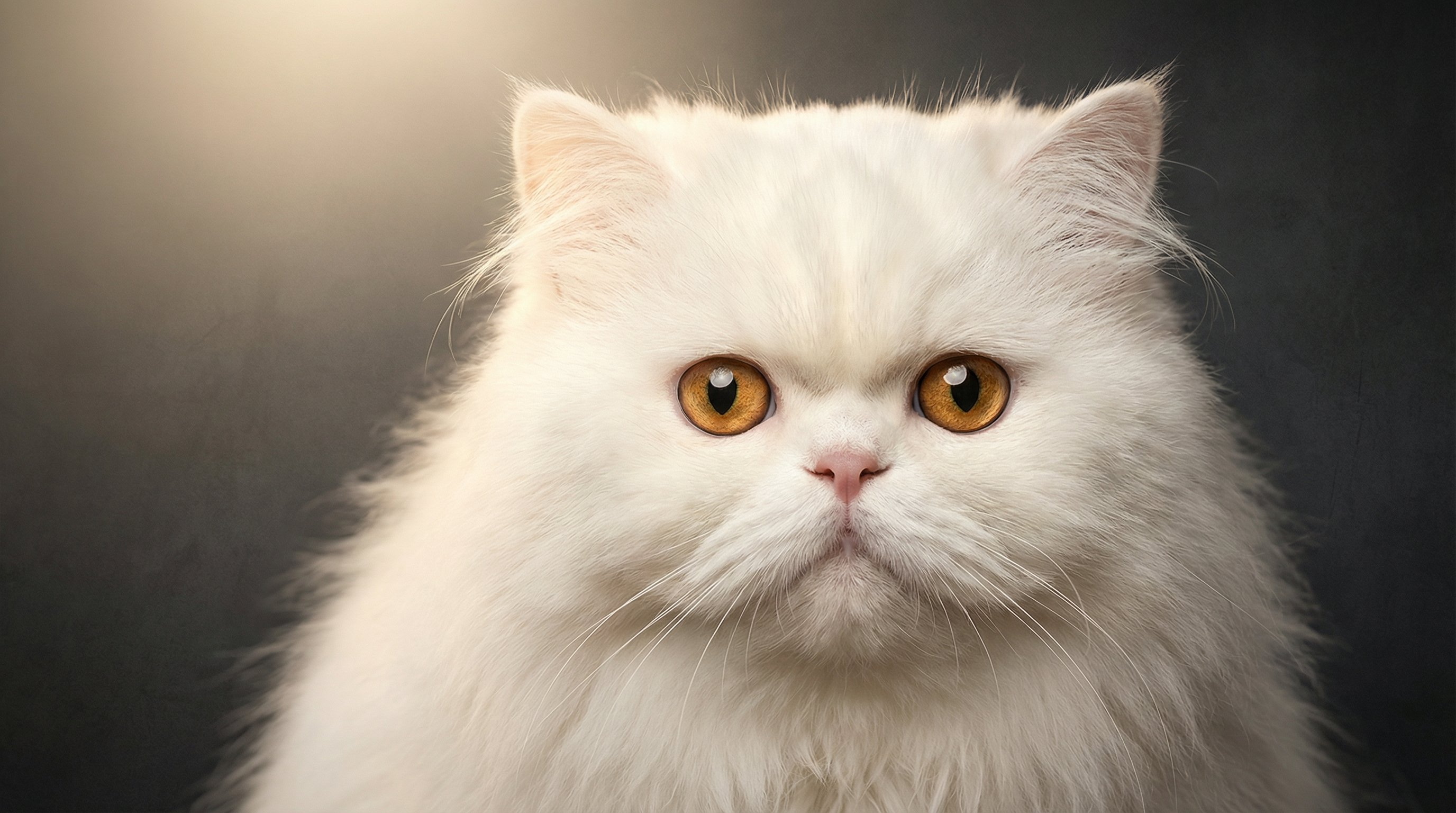
Let's be honest, not all cats are created equal when it comes to art. A tabby is charming. A Siamese has drama. But a Persian? A Persian cat portrait practically paints itself.
Here's why artists (and cat parents) have been obsessed with painting Persians for over a century.
That Fur Is a Whole Art Project
Persian cats carry around what might be the most luxurious coat in the animal kingdom. Long, flowing, layered, it catches light in ways that make painters and photographers lose their minds. Agnes Augusta Talboys captured this beautifully in her painting Persian Cat (c. 1908–1920), now viewable at The Somerset museum. The texture alone in that piece is mesmerizing.
Rendering Persian fur forces an artist to think about depth, shadow, and movement all at once. Each strand overlaps another. The undercoat peeks through. Light pools on the chest and fades along the flanks. It's the kind of challenge that produces genuinely stunning results, whether in oils, acrylics, or AI-generated cat art.
Those Faces Were Made for Portraits
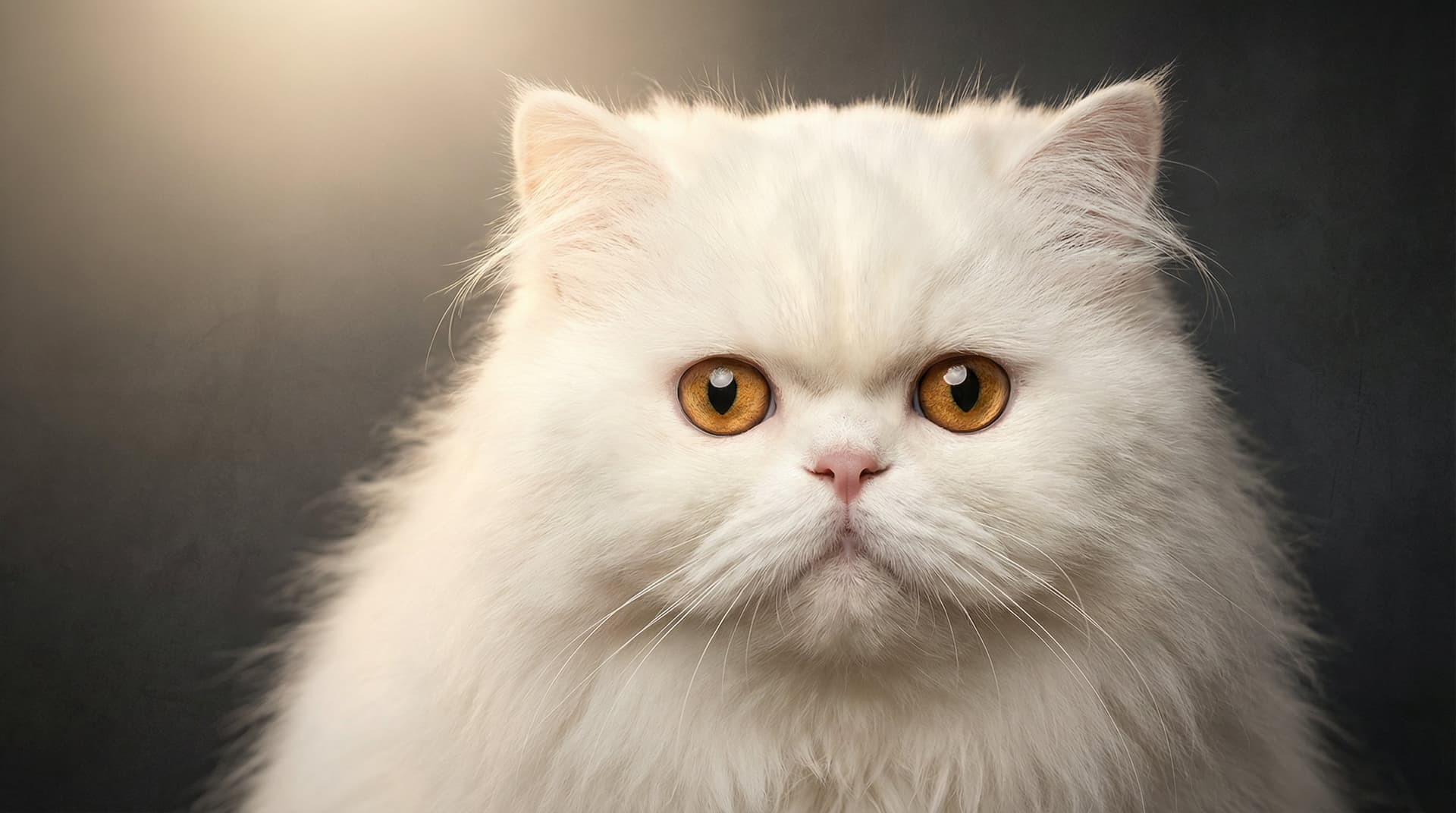
Round, open, expressive. Persian cats have flat faces with enormous eyes that communicate more emotion than most humans at a dinner party. That combination of wide-set eyes, tiny nose, and full cheeks creates a naturally symmetrical composition, basically portrait gold.
Contemporary artist Michelle Farro demonstrated this perfectly with her white Persian cat painting "Baby," inspired by a real photograph. The emotional depth she pulled from those features is exactly why Persians dominate custom cat portraits and fine art collections alike.
Color Palettes That Pop
Persians come in a ridiculous range of colors, solid white, deep black, silver chinchilla, calico, blue-cream, red tabby. Each coat offers a completely different color story for a portrait.
A white Persian against a dark background? Instant drama. A calico with patches of orange, black, and cream? Rich, warm, and endlessly interesting to render. This variety is one reason Persian cat portraits work across so many art styles, from renaissance-inspired cat art to modern minimalist prints.
We've seen thousands of cat photos come through, and Persians consistently produce the most striking transformations. Something about those features just translates.
How to Turn Your Persian Cat Photo Into Museum-Quality Art
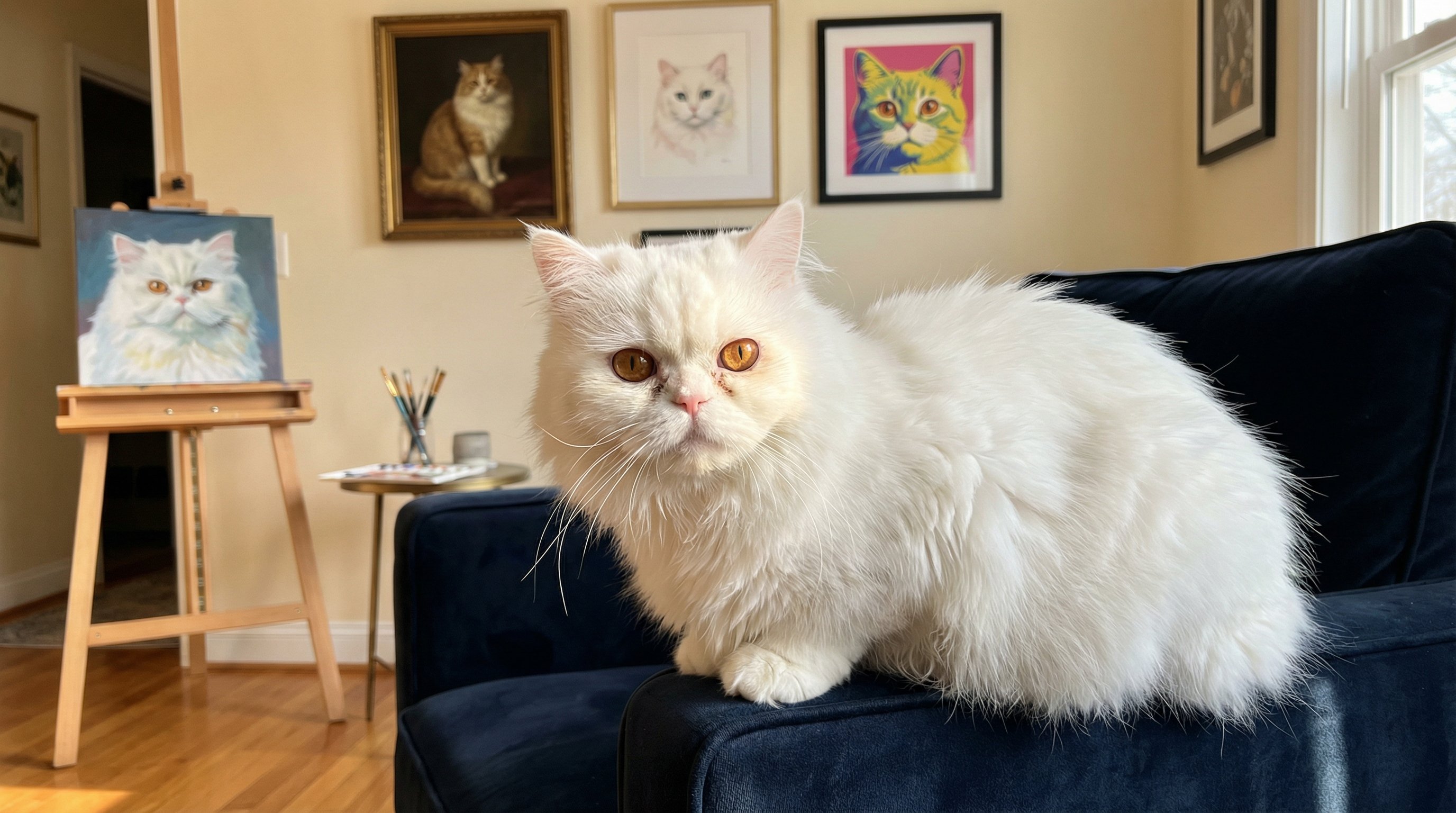
Here's where we get practical. You've got a gorgeous Persian. You want a portrait that does them justice. We've helped create thousands of these, and we've also made plenty of mistakes along the way. Here's what actually works.
Start With the Right Photo
This is where most people trip up, and frankly, where we used to give bad advice. We once told customers "any clear photo will do." That's... not quite true.
For the best Persian cat portrait, your source photo needs:
- High contrast between your cat and the background. A white Persian on a white couch? Nightmare. A white Persian on a dark sofa? Perfect.
- Clear focus on the face and eyes. Those soulful eyes are the emotional anchor of any portrait.
- Visible fur texture. Natural light works best. Avoid flash, it flattens the coat and creates harsh shadows.
- Your cat facing the camera or at a slight angle. Three-quarter views tend to produce the most dynamic portraits.
We learned the hard way that a blurry photo produces blurry art, no matter how good the technique. Spend an extra five minutes getting the shot right. Your future wall art depends on it.
The Traditional Route: Acrylic Painting Techniques
If you're a hands-on creator, acrylics are your best friend for Persian cat portraits. Here's a simplified process that works:
- Start with a tacky background wash. This gives your subsequent layers something to grip.
- Outline the eyes with dark gray. Don't start with black, you need room to go darker.
- Fill the pupils, then add iris colors around them. Build outward.
- Layer shadows and highlights. Add shadows under the top eyelid for realism. This single detail separates amateur work from convincing portraiture.
- Build fur texture with fine brushes. Work in thin, overlapping strokes. Let each layer dry before adding the next.
This process takes time. A lot of it. Professional commissioned Persian cat portraits typically run $200 or more and can take weeks. If you enjoy painting, it's incredibly rewarding. If patience isn't your thing... keep reading.
The Modern Shortcut: AI-Powered Portraits
Here's our honest take. Traditional art is beautiful. We respect it deeply. But most cat parents don't have weeks to wait or hundreds to spend, and they shouldn't have to.
That's exactly why we built CatArt.ai's portrait tool. Upload a photo, pick from 40+ styles, and preview your Persian cat portrait for free. The whole process takes about 60 seconds.
A few things we're proud of:
- Free preview before you pay. No surprises.
- 4K resolution output. Sharp enough for large canvas prints and framed wall art.
- 70+ art styles. Everything from oil painting classics to pop art to watercolor.
- 20% of every sale goes to shelters and rescues. Every. Single. Purchase.
We won't pretend AI replaces a human artist's hand. It doesn't. But for most cat lovers who want a beautiful, affordable Persian cat portrait on their wall this week, it's a genuinely great option.
Printing and Display Tips
A portrait is only as good as how you display it. We've seen gorgeous digital art ruined by cheap printing and we've seen simple designs elevated by thoughtful framing.
Our recommendations:
- Canvas prints work beautifully for painterly styles. The texture of the canvas adds physical depth.
- Framed prints on archival paper suit detailed, realistic portraits. They feel more like traditional fine art.
- Metal or acrylic prints are great for modern, high-contrast styles.
Whatever you choose, make sure the resolution of your digital file supports the print size. For anything larger than 16x20 inches, you want at least 4K. Our cat art prints are designed with this in mind, every download is print-ready at large scale.
One more thing: lighting matters as much on the wall as it did in the photo. A well-lit Persian cat portrait in your living room becomes a conversation piece. A dimly lit one in a hallway becomes wallpaper. Give your art, and your cat, the spotlight they deserve.
Conclusion
Persian cats have inspired artists for over a century, and it's easy to see why. That fur, those eyes, that quiet dignity, they're born to be immortalized.
Whether you pick up a brush or upload a photo, the goal is the same: create a Persian cat portrait that makes you feel something every time you walk past it. Your cat already gives you that feeling daily. Now put it on the wall.
Frequently Asked Questions About Persian Cat Portraits
What makes Persian cats ideal subjects for portraits?
Persian cats excel as portrait subjects due to their luxurious, layered coat that catches light beautifully, combined with wide-set eyes and symmetrical round faces. Their expressive features communicate emotion, creating naturally compelling compositions that translate well across oil, acrylic, and digital art styles.
How do I prepare the perfect photo for a Persian cat portrait?
Choose a photo with high contrast between your Persian and the background, clear focus on the face and eyes, and visible fur texture from natural light. Avoid flash and white backgrounds. A three-quarter view or direct camera angle produces the most dynamic portraits for any art style.
What are the best techniques for painting Persian cat fur?
Start with a tacky background wash, outline the eyes, then layer shadows and highlights with fine brushes using thin, overlapping strokes. Build fur texture gradually, letting each layer dry before adding the next. This approach captures the depth and movement that makes Persian coat texture so striking.
Can I turn my Persian cat photo into art quickly?
Yes, AI-powered tools can transform your Persian cat photo into museum-quality art in 60 seconds. You can upload a photo, preview from 40+ styles, and download a 4K resolution portrait ready for framing—ideal if you want professional results without weeks of waiting.
What print format works best for a Persian cat portrait?
Canvas prints enhance painterly styles with added physical texture, while framed archival prints suit realistic portraits for a fine art feel. Modern high-contrast styles look stunning on metal or acrylic. Ensure your digital file is at least 4K resolution for prints larger than 16x20 inches.
Why are Persian cats more popular in portrait art than other breeds?
Persian cats have inspired artists for over a century thanks to their regal bearing, emotionally expressive faces, and stunning coat variety—from solid white to calico. Historical pieces like Agnes Augusta Talboys' Persian Cat demonstrate how their luxurious features create naturally mesmerizing compositions across artistic traditions.